CookinCityRecipes & Articles For Better Cooking At Home

Chicken Stock

The Ultimate base for all dishes!

Quick answerMakes 10 servings, ready in 4 hours 10 min, International cuisine.
By Jaron Kimhi··👁 381 views
chicken stock
How do I get flavor into my chicken stock? This is the ultimate question when comparing restaurant stock to homemade. The taste of many dishes is determined by the quality of the chicken stock. It adds a great umami flavor and lets us add so much fewer spices to our food. So, what's the secret to making a good chicken stock? I'd divide it into 2 parts:
  • Ingredients
  • Cooking
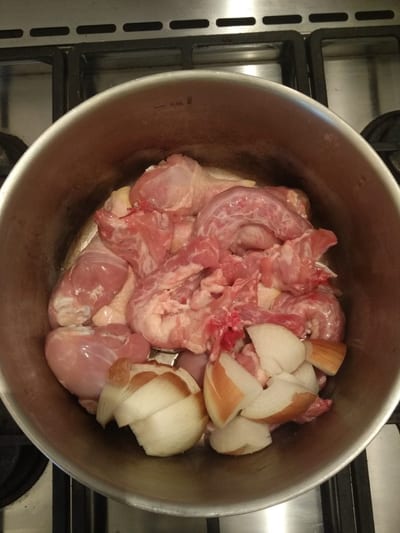
When it comes to ingredients, I've seen many variations of chicken stock. Some add marrow bone for the extra flavor and gelatin, some add a bit of dashi stock for increased umami — but the base of the stock in most cases remains the same: chicken parts, root vegetables, and herbs. When it comes to the chicken parts we add to the soup, we have many options: wings, thighs, necks, full chicken, legs. A different combination of these will produce a different-tasting stock. We're looking for a combination of chicken parts with a decent amount of both bones and meat. The bones and cartilage-rich joints are responsible for gelatin production in the stock — that's very important if you want a rich, full-bodied stock and not a watery one with no character. The meat determines the taste. My personal favorite is necks and thighs. The thighs supply the gelatin, and the necks are just perfect — they hold so much flavor because of the multiple blood vessels, and they contain a decent amount of bone on top of that. When it comes to the vegetables, I'm pretty old-fashioned and use just the basics: onion, celery, carrot, garlic, and potato (it adds starch). The options for adding more vegetables are of course wide and depend on your own taste — you can add leeks, parsnip, parsley root, etc. Don't bother slicing the vegetables small. Don't even peel the onions (the skin adds color to the stock). Leave them in fairly big chunks — it'll add just as much flavor as chopping them.
* This is not the case with the chicken parts. If you want to extract more flavor in a shorter time, cut the chicken parts into smaller pieces. That way you can reduce some of the cooking time.
  chicken stock

Cooking the chicken stock

Every kitchen has a different cooking time for chicken stock — it varies from one to the next. Generally, I'd say that an hour and a half is enough to develop a good flavor and aroma. But if you really want that deep chicken stock flavor and rich body, you need to cook it for at least 4 hours. After 4 hours the gelatin content is much higher (you can really see it in the fridge when the stock sets into a gel texture), and you get a great rich body that works as a solid base for every purpose.

Method

  1. 1

    Starting the stock· 8 minutes

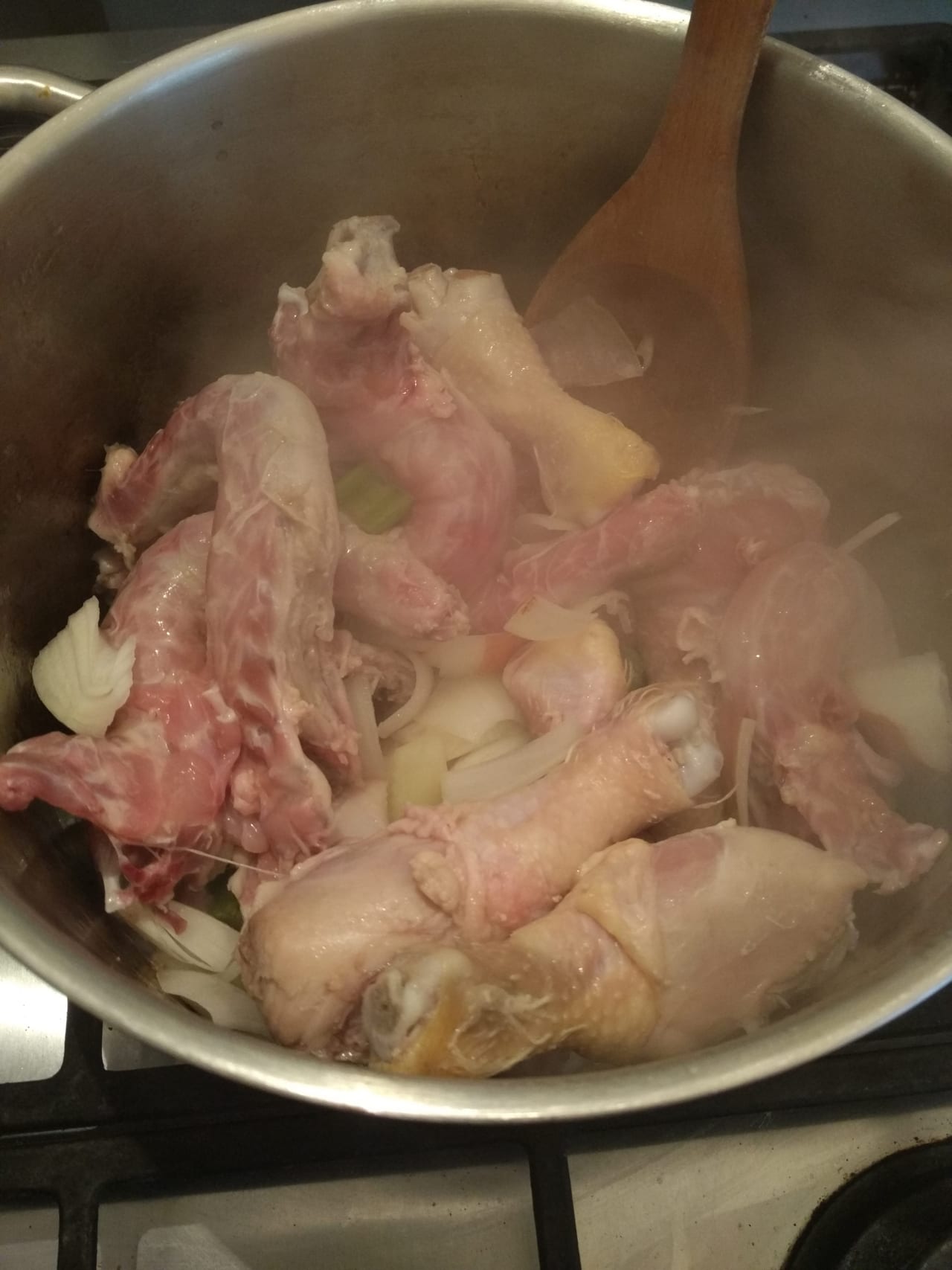
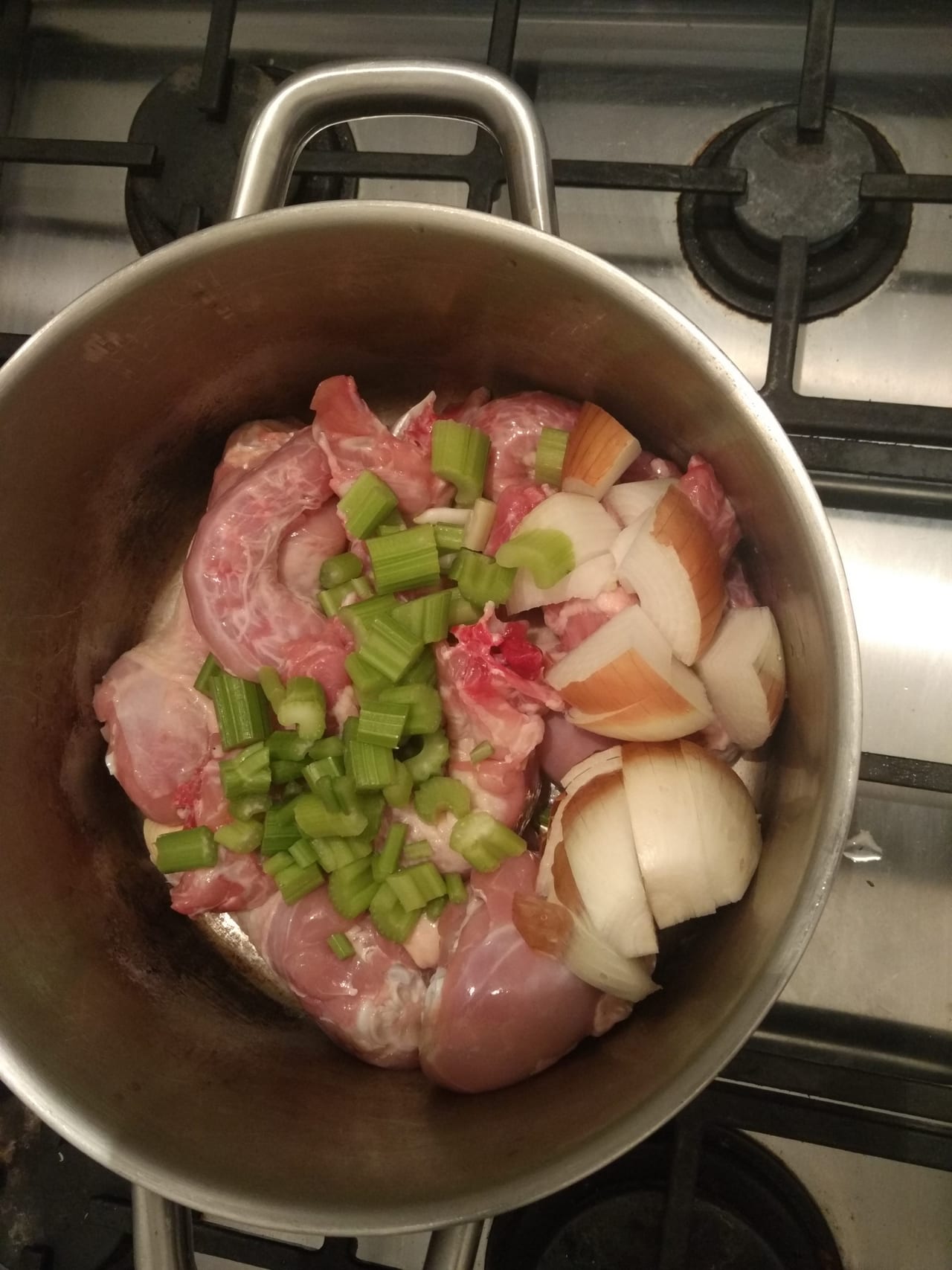
    Put a big pot over High heat and place the chicken parts, onions and celery stems in the pot. There is no need for oil, the chicken will soon dissolve fat. Cook for 5 more minutes, add the carrots and tomatoes, stir and cook for another 3 minutes.
    chicken stockchicken stockchicken stock
  2. 2

    boiling and skimming· 20 minutes

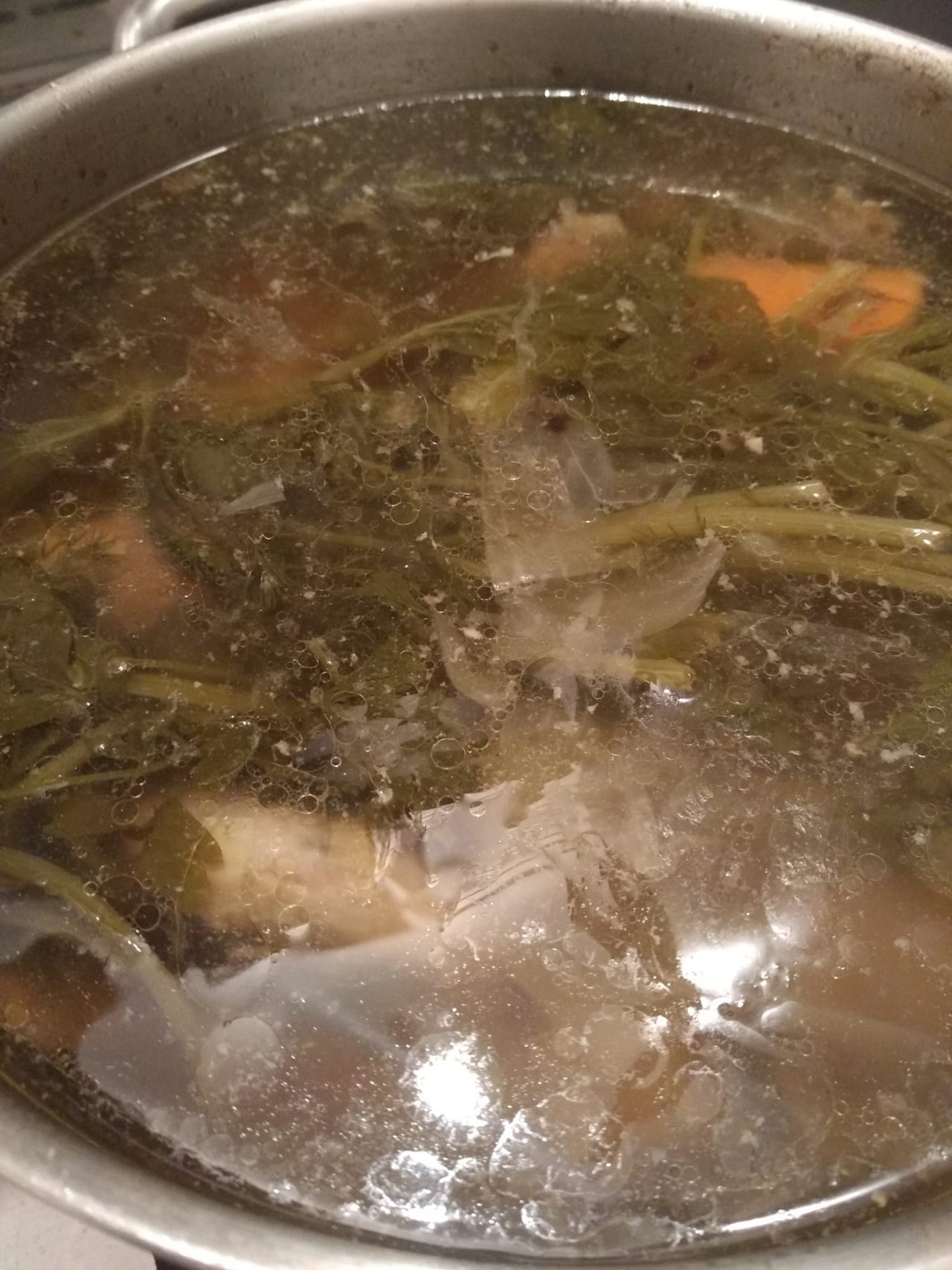
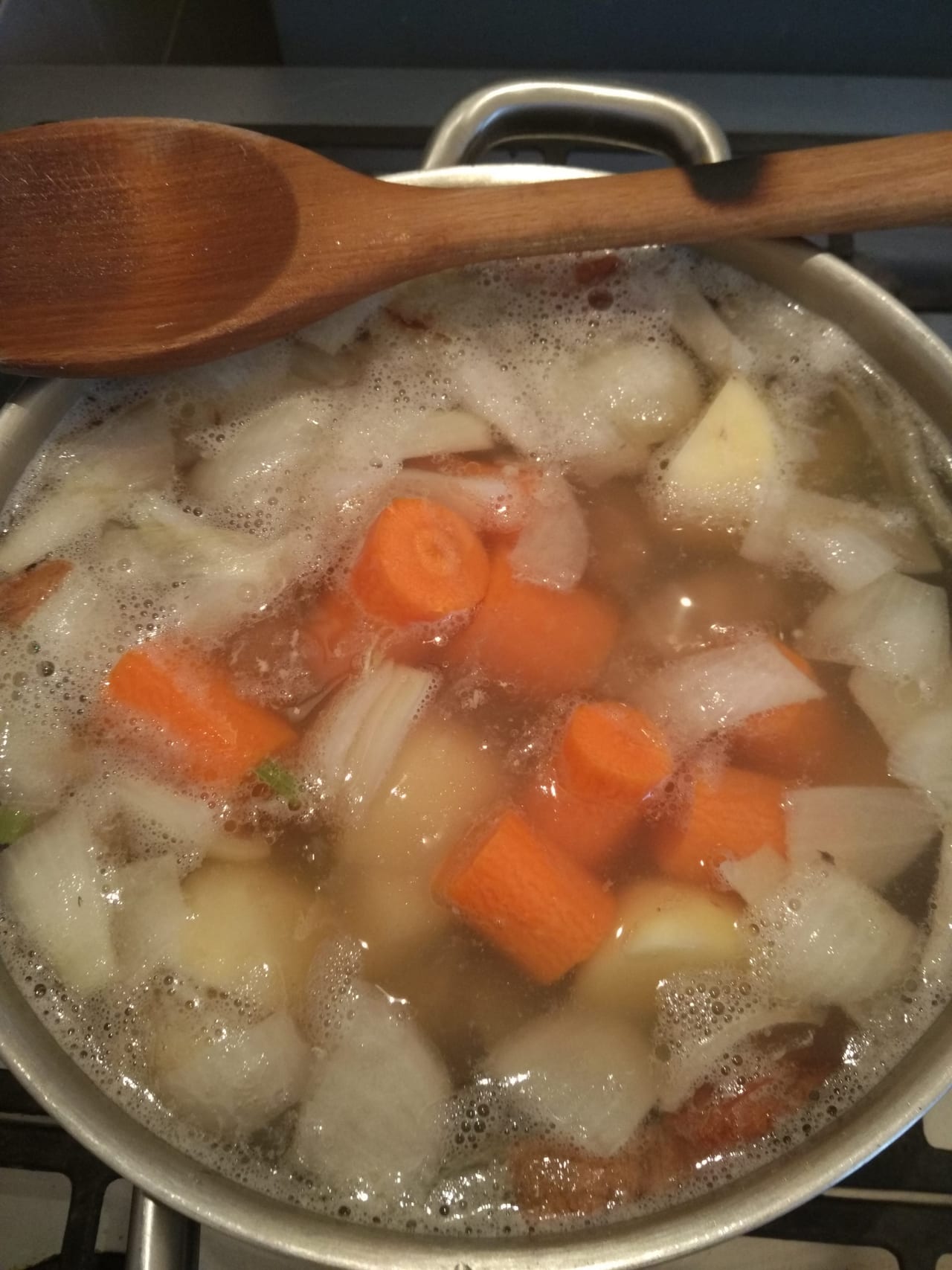
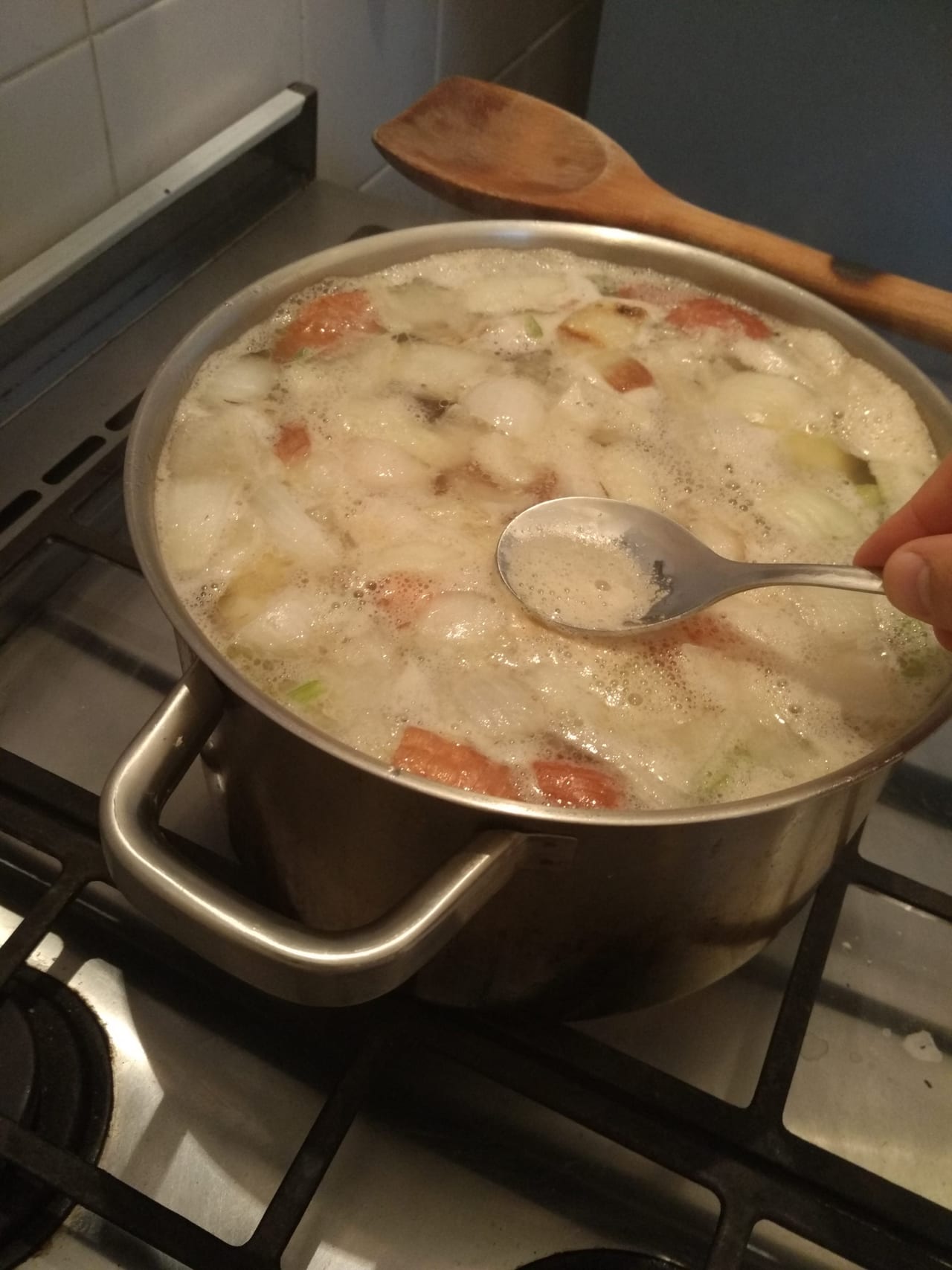
    Fill the pot with water up to the top and wait for it to simmer. By the time water had reached boiling point the chicken had discharged a lot of waste that needs to be skimmed. Use a spoon to skim the chicken stock and reduce to a low heat.
    chicken stockchicken stock
  3. 3

    Adding Herbs and spices and cooking the chicken stock to perfection· 4 hours

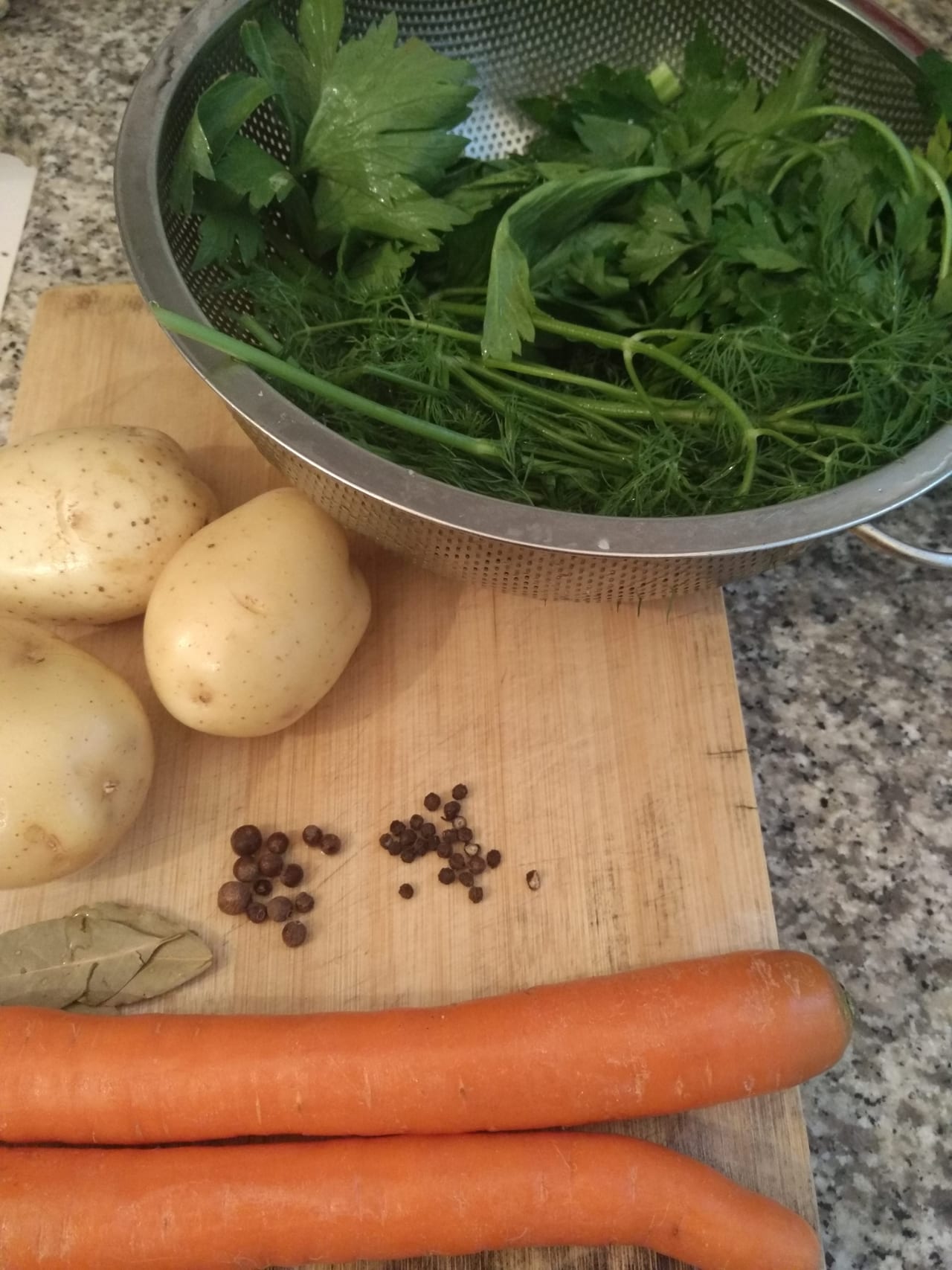
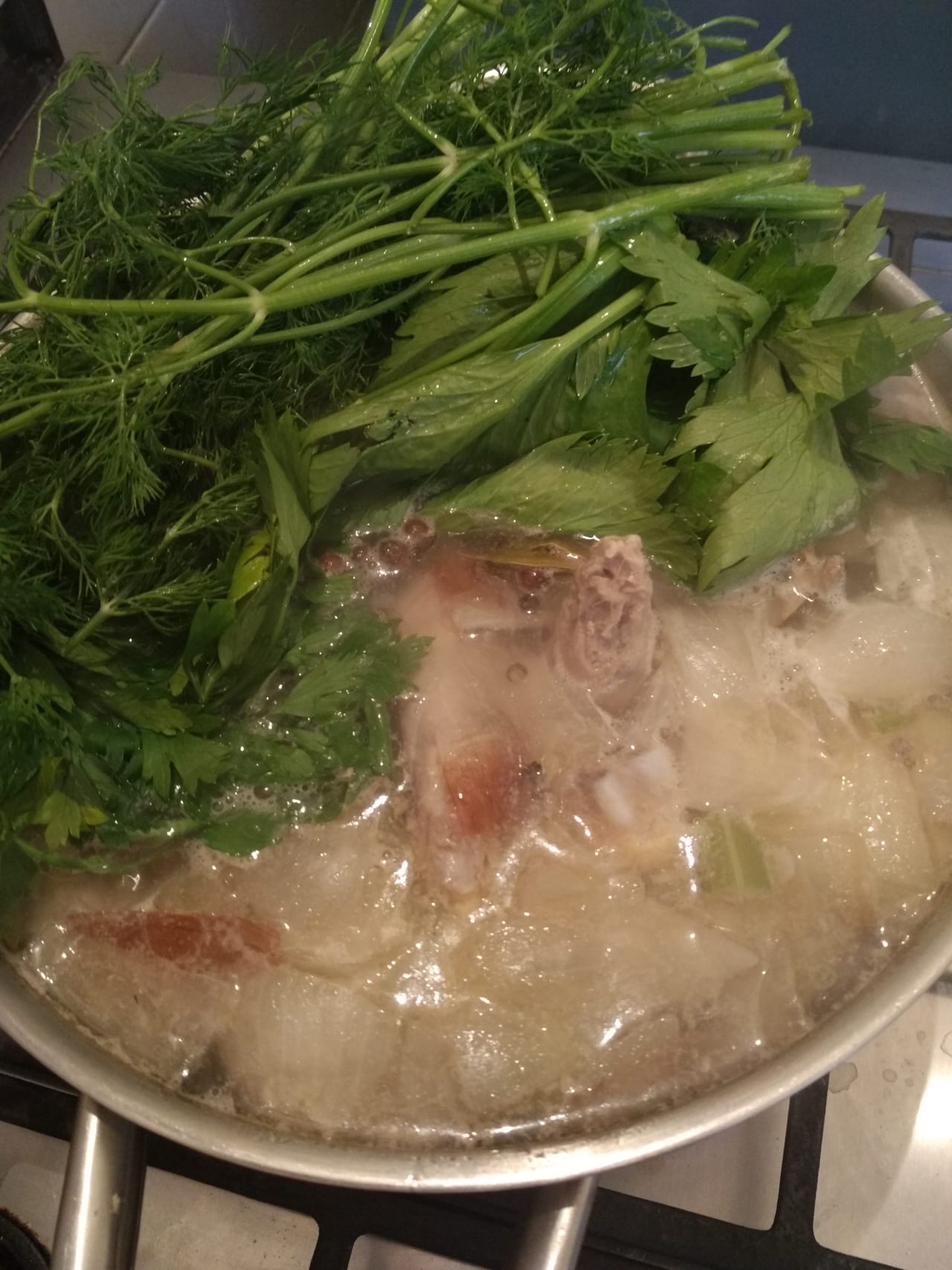
    Add the garlic, Dill, Parsley sprigs, celery leaves, bay leaves, allspice, black peppercorn and salt. Cover the lid and cook on a low heat for 4 hours. when ready, take of the heat, cool for 2 hours on the counter and strain the chicken sauce. keep in the fridge for up to 4 days and in the freezer up to 2 months.
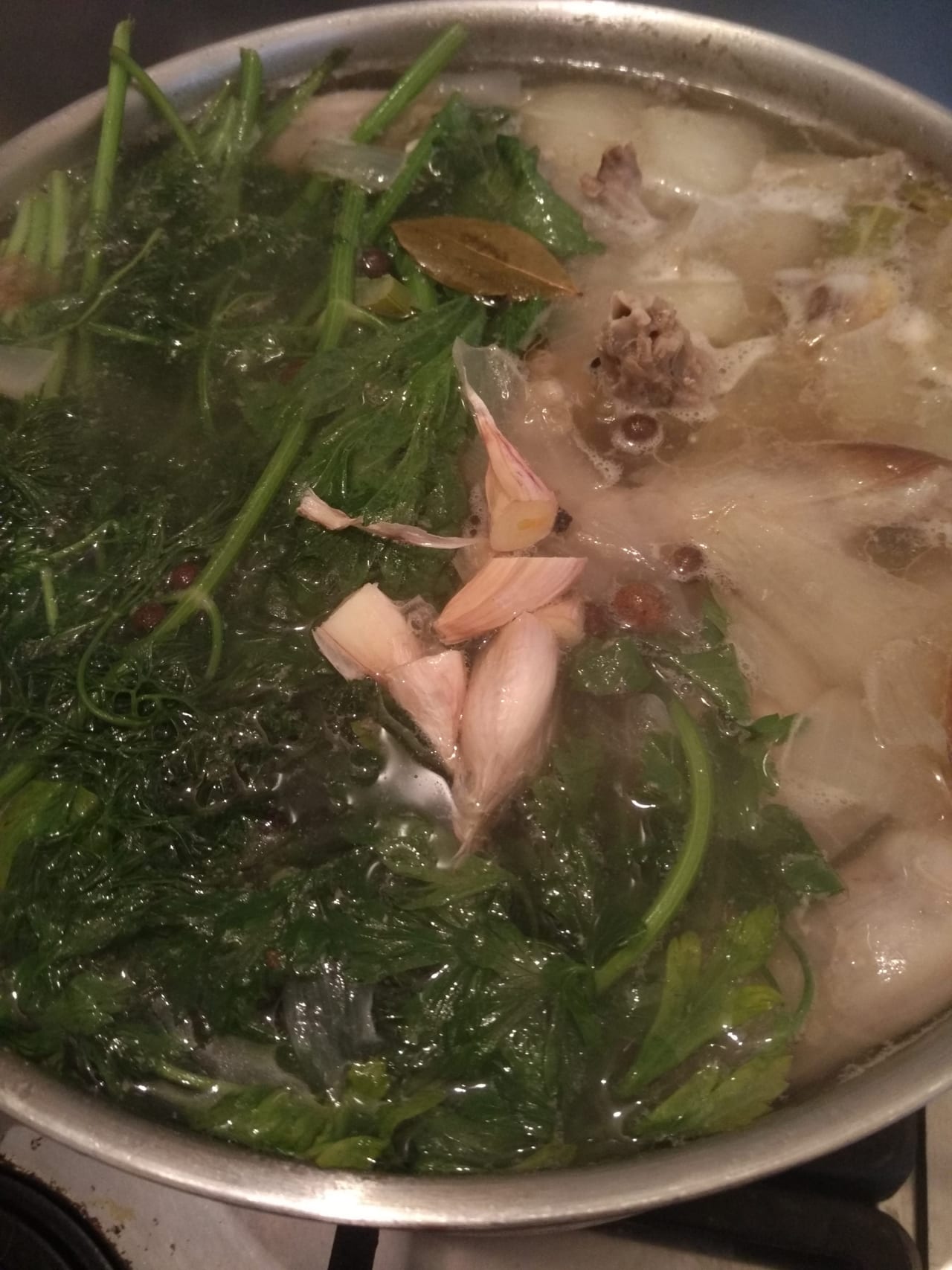
    chicken stockchicken stockchicken stock
Recipe by

Jaron Kimhi

Jaron Kimhi — self-taught home cook from Tel Aviv, writing and cooking every recipe on this site himself. 20+ years of tinkering in the kitchen, leaning toward slow cooking, classic technique, and honest ingredients.

More recipes by Jaron →

Questions & answers

Can I use a whole chicken instead of necks and thighs?
Totally — just make sure your pot is big enough to hold it with a gallon of water. Necks and thighs are great for collagen and flavor, but a whole bird works the same way.
Do I have to skim the stock, or can I skip it?
Don't skip it — that grey foam is impurities from the chicken and you don't want it in your final stock. Just run a spoon across the surface a few times once the water hits a boil.
How do I store and freeze the stock?
Keep it in the fridge for up to 4 days or freeze it for up to 2 months. Let it cool on the counter for 2 hours before you put it away.
Can I speed this up in a pressure cooker?
The recipe is built around a regular stovetop low-and-slow method for 4 hours, so stick with that if you want the results Jaron is going for here.
Why do I add the celery leaves later instead of at the start?
The stems go in early to build the base flavor with the chicken, but the leaves get added with the herbs later — they're more delicate and add a fresher, lighter celery note to the finished stock.

Nutrition per serving

110
Calories
1.2g
Total Fat
0mg
Cholesterol
380
Sodium